Back to Blog

Tagged

knowledge-management
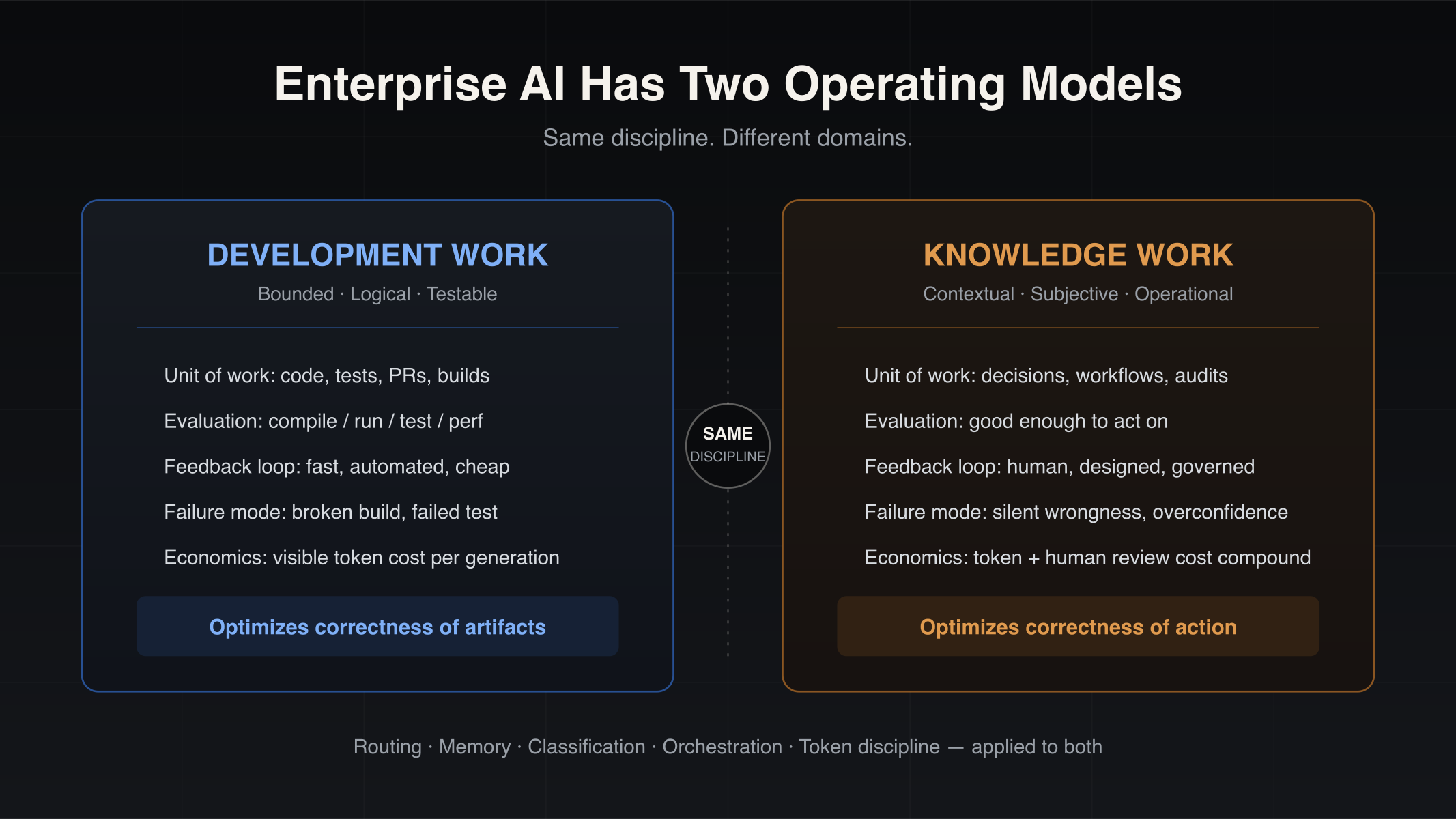

Diagram titled 'Enterprise AI Has Two Operating Models' comparing two panels: Development Work (bounded, logical, testable — code, tests, PRs, and builds evaluated by compile/run/test/perf with a fast automated feedback loop, optimizing correctness of artifacts) versus Knowledge Work (contextual, subjective, operational — decisions, workflows, and audits evaluated by 'good enough to act on' with a human, governed feedback loop, optimizing correctness of action), joined by a center badge reading 'Same Discipline' and a footer listing routing, memory, classification, orchestration, and token discipline as applied to both

Enterprise AI Has Two Operating Models: Development Work and Knowledge Work

Enterprise AI is splitting into two operating models — development work and knowledge work. Why coding-copilot playbooks stall on operational workflows, and which engineering disciplines transfer.
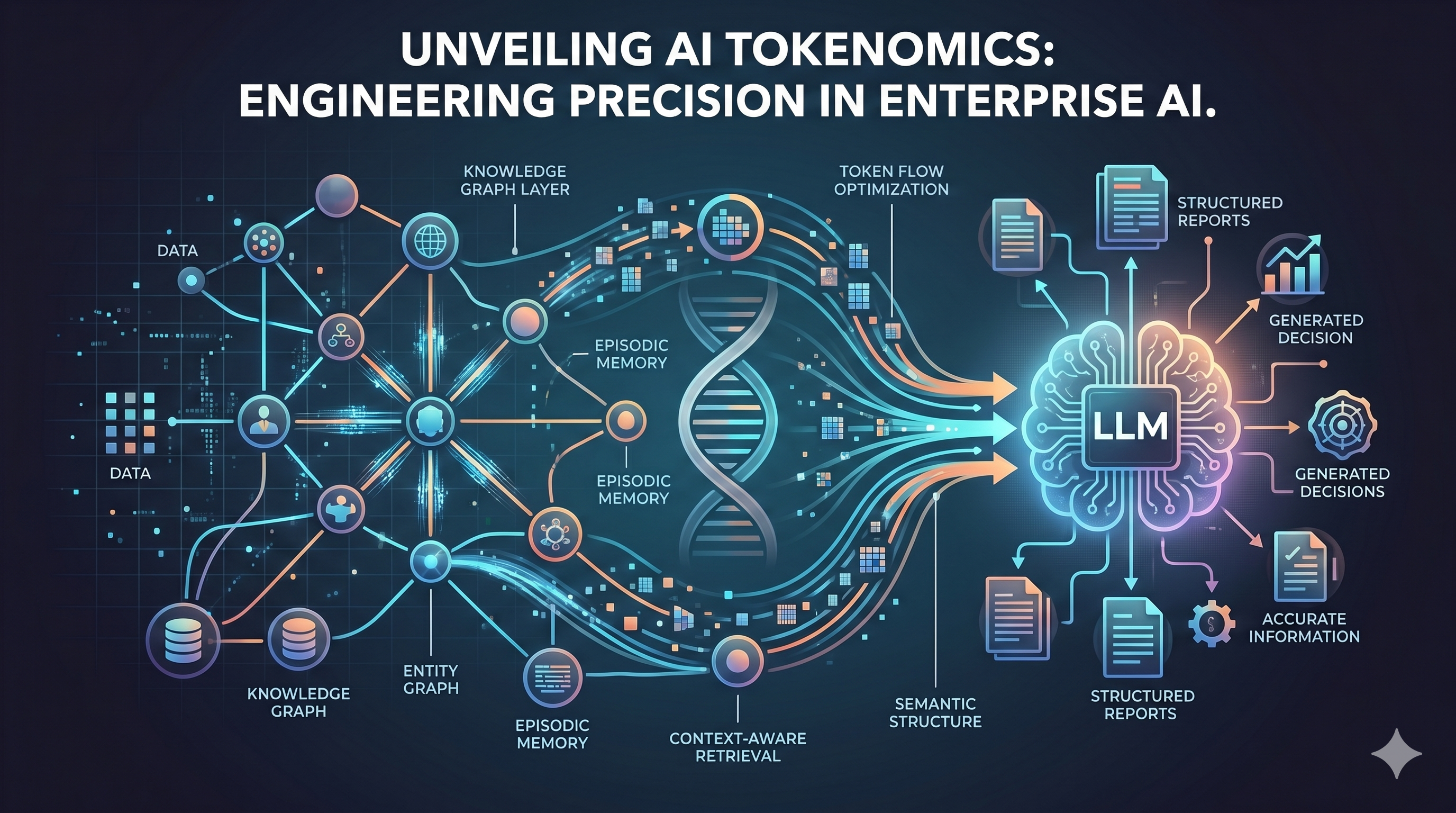
Diagram titled 'Unveiling AI Tokenomics: Engineering Precision in Enterprise AI' showing data sources flowing through a knowledge graph layer, entity graph, episodic memory, and context-aware retrieval into token-flow optimization and semantic structure, then into an LLM that produces structured reports, generated decisions, and accurate information

Tokenomics Is the New AI Efficiency Frontier — and Here's How We're Winning It

AI tokenomics is the discipline of managing token consumption at enterprise scale. Learn how semantic infrastructure, context-aware retrieval, and agent budgeting cut AI costs without sacrificing quality.
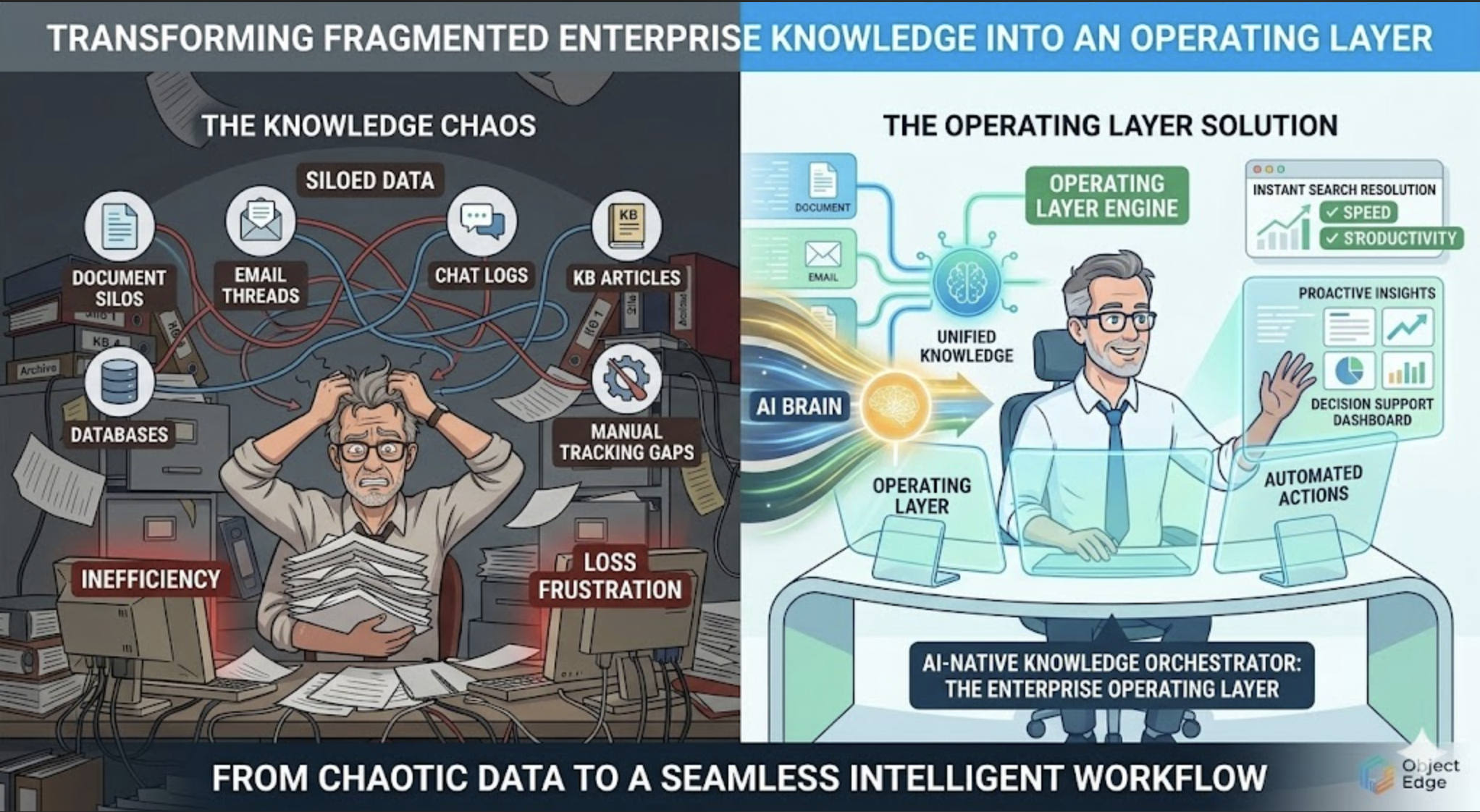
Transforming Fragmented Enterprise Knowledge Into an Operating Layer — left panel 'The Knowledge Chaos' shows a frustrated worker surrounded by document silos, email threads, chat logs, KB articles, and databases tangled in red and blue lines, with labels for siloed data, manual tracking gaps, inefficiency, and loss/frustration; right panel 'The Operating Layer Solution' shows a calm worker at a clean dashboard with an AI brain feeding into unified knowledge, instant search resolution (speed, productivity), proactive insights, decision support dashboard, and automated actions, captioned 'AI-Native Knowledge Orchestrator: The Enterprise Operating Layer — From Chaotic Data to a Seamless Intelligent Workflow'

Turn Fragmented Enterprise Knowledge Into an Operating Layer That Teams Can Actually Use

How enterprises unify scattered documents, systems, and tribal knowledge into a searchable, governed operating layer that improves speed, consistency, and decision-making.
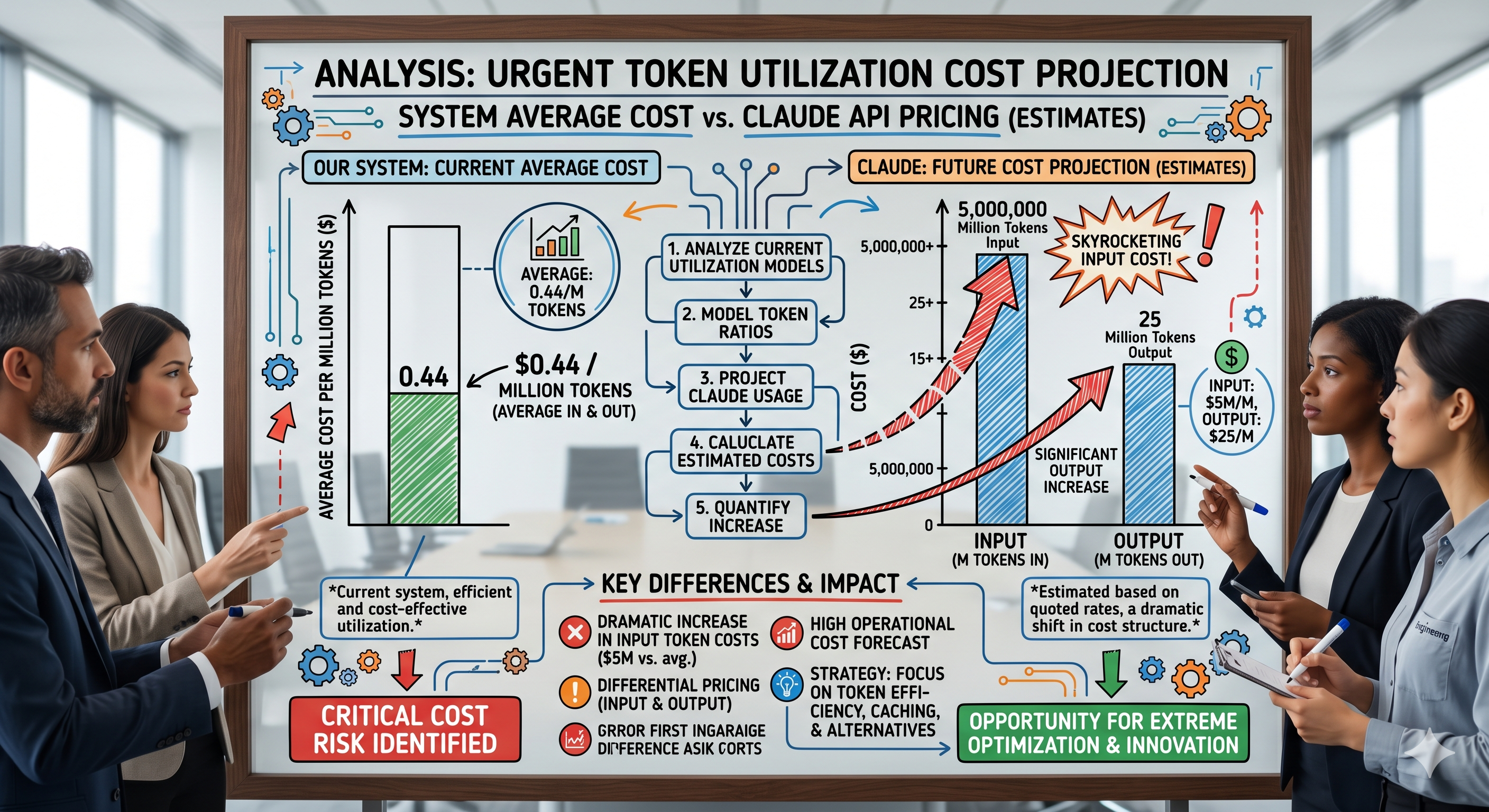
Whiteboard analysis of token utilization cost projections, comparing current system average cost per million tokens to future Claude API pricing estimates

The End of Subsidized Tokens Is Coming. Plan Accordingly.

The era of artificially cheap AI tokens is ending. Here is why token efficiency is becoming architecture, and how enterprises should plan a model portfolio strategy before prices spike.
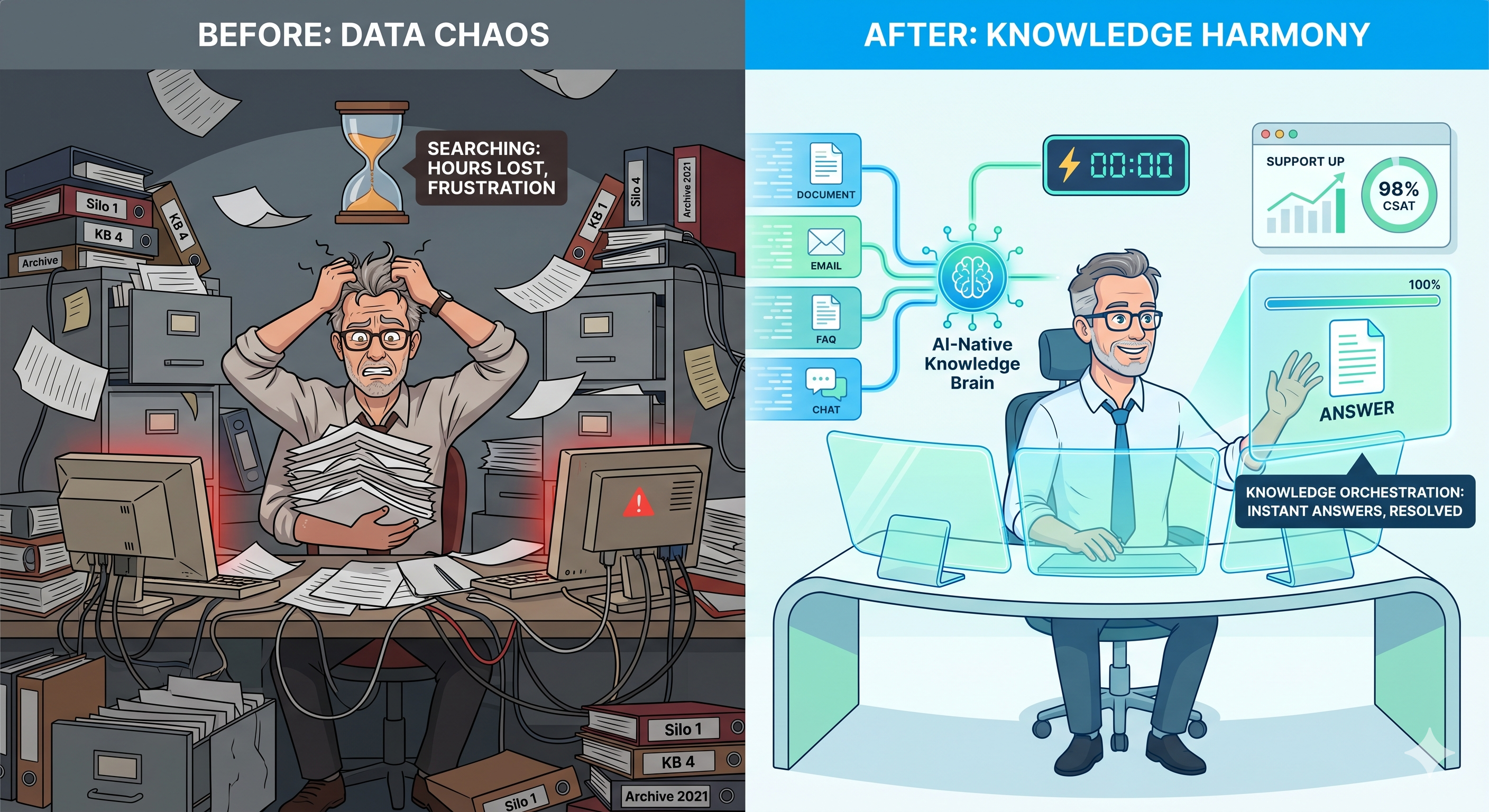
Side-by-side illustration contrasting 'Before: Data Chaos' — a frustrated worker buried in paperwork and silos — with 'After: Knowledge Harmony' — a calm worker using an AI-Native Knowledge Brain that unifies documents, email, FAQ, and chat into instant answers

AI-Native Knowledge Orchestration: Cut Search Time, Raise Support Accuracy, and Move Faster

How enterprise knowledge orchestration unifies fragmented content across Salesforce, SAP, Confluence, and email to improve search, support, and productivity.
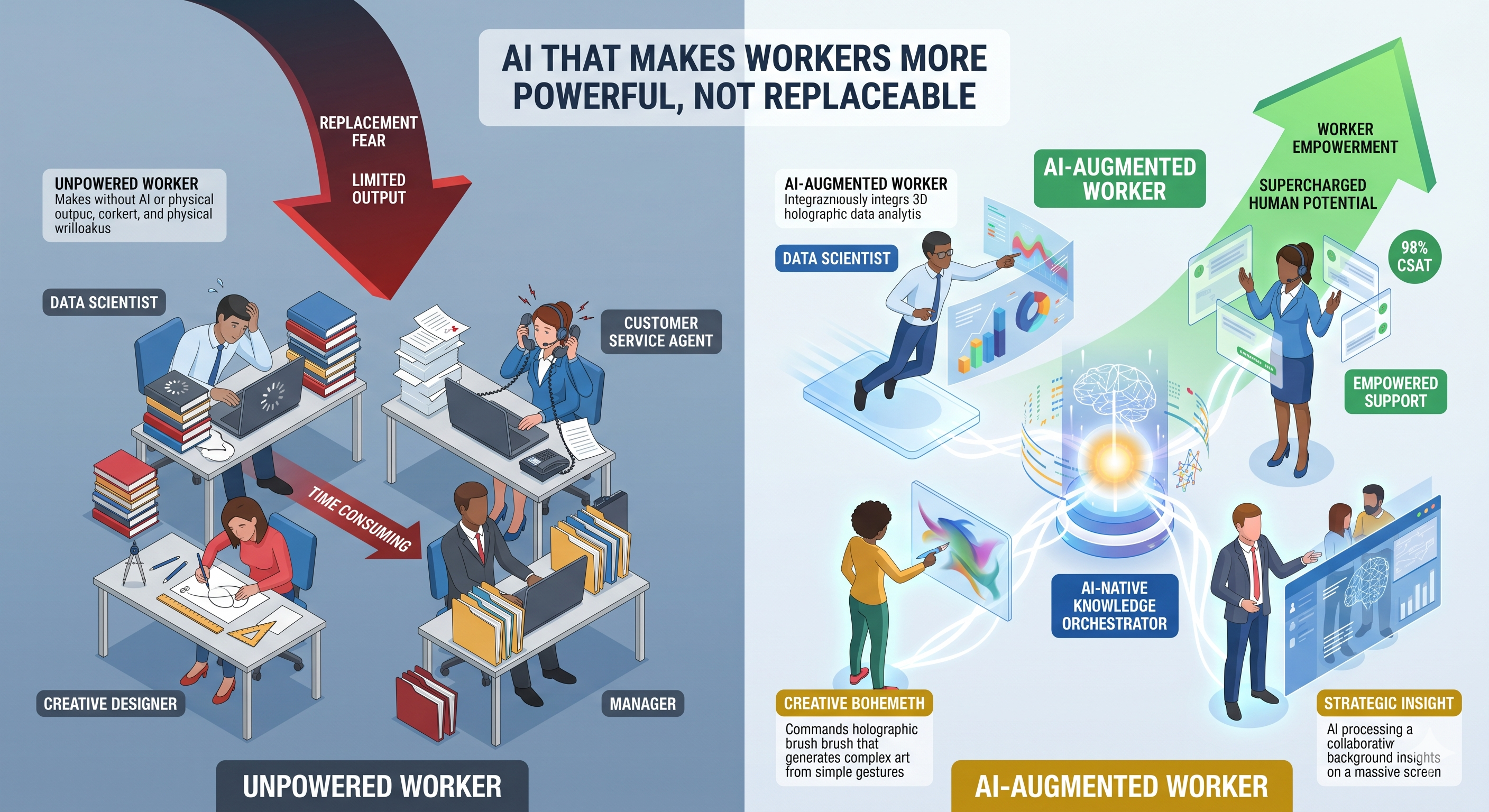
Side-by-side illustration contrasting an 'Unpowered Worker' panel — overwhelmed data scientist, customer service agent, creative designer, and manager buried in books and folders — with an 'AI-Augmented Worker' panel where the same roles are supercharged by an AI-Native Knowledge Orchestrator, with a green arrow showing worker empowerment

AI That Makes Workers More Powerful — Not Replaceable

Enterprise AI should 10x worker productivity and drive business growth, not eliminate jobs.